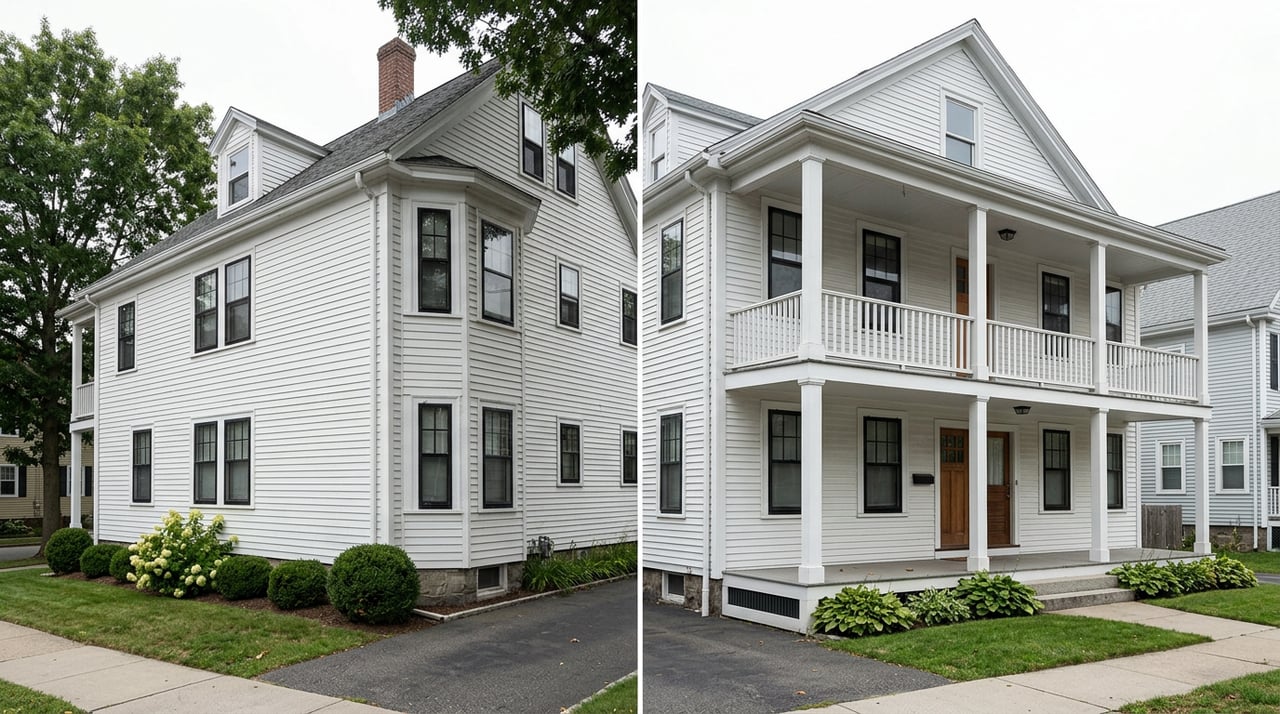
A buyer walks into an Oak Hill open house on a street like Carver, sees a well-kept three-family with fresh kitchens on two of the three floors, and starts doing the math in their head: live in one unit, rent the other two, let the tenants cover most of the mortgage. It's the same pitch this neighborhood has offered for years, and it's still a real one. What's changed is what happens after the offer is accepted.
Two separate rule changes, both dated within the last three years, now sit underneath that pitch. One governs whether the loan clears underwriting. The other governs whether the buyer can legally rent the units at all. Neither shows up on the listing sheet. Both show up in Oak Hill more often than in most Providence-area neighborhoods, because so much of the housing stock here is exactly the kind these rules were written for: two- and three-family buildings, most of them built before 1978.
The Appraiser's Rent Isn't the Portal's Rent
If a three- or four-unit property is financed with an FHA loan, it has to pass what's called the self-sufficiency test, laid out in HUD's Single Family Housing Policy Handbook 4000.1. The rule doesn't apply to duplexes. For three- and four-unit properties, the net rental income, calculated at 75 percent of the appraiser's estimated fair market rent for every unit including the one the buyer will occupy, has to meet or exceed the full monthly mortgage payment on its own.
That 75 percent discount exists to account for vacancy and turnover. It isn't a judgment on the buyer's management skills. It's applied to every FHA deal on a three- or four-unit property, no exceptions.
Here's where Oak Hill buyers get caught. A buyer who prices out the rent roll using the highest asking rents advertised on nearby rental listings can land on a number that looks comfortable next to the mortgage payment on paper. But the appraiser isn't required to use that number. HUD publishes its own fair market rent benchmark for the Providence-Fall River metro area every fiscal year, and appraisers working from a more conservative comparable set can land closer to that federal benchmark than to whatever the highest local rental ad is asking. A gap of even a hundred or two dollars a month, multiplied across two or three units, is often the difference between a deal that clears underwriting and one that doesn't. The FHA appraiser's opinion is the number that counts, not the seller's current lease, not the buyer's own research, and not the number that made the deal look good when the buyer first ran it at home.
The practical fix is straightforward: run the self-sufficiency math before writing an offer, using a conservative rent assumption rather than the highest one you've seen advertised nearby. If the numbers are close, a larger down payment or a rate buydown can be enough to clear the test. If they aren't close at all, a conventional loan with 5 percent down doesn't require this test at all, though it comes without FHA's lower rate advantage and its own reserve requirements.
The Exemption That Disappeared in 2024
The second friction has nothing to do with financing and everything to do with what happens after closing, if any unit in the building is going to be rented.
Rhode Island's Lead Hazard Mitigation Act, in place since 2005, requires a Certificate of Lead Conformance for rental units in buildings built before 1978, which describes most of Oak Hill's housing stock. For years, there was a carve-out: a two- or three-unit building was exempt from that certificate requirement if the owner lived in one of the units. Buy the triple-decker, move into the first floor, rent the other two, and the certificate requirement simply didn't apply to you.
That exemption is gone. Legislation effective January 1, 2024 removed it for owner-occupied two- and three-unit dwellings, meaning those buildings now fall under the same inspection requirement as fully rented properties. A buyer who plans to live in one unit of an Oak Hill two- or three-family and rent the rest can no longer skip the certificate simply because they're on-site.
On top of that, Rhode Island stood up a statewide Rental Registry. Initial registration for existing rental properties was due October 1, 2024, and new owners must register within 30 days of acquiring or leasing a property, a deadline that still applies to anyone closing on an Oak Hill two- or three-family today. A Certificate of Lead Conformance itself has to be renewed roughly every two years.
None of this replaces the separate, older requirement that applies to the sale itself: any one- to four-unit dwelling built before 1978 gives the buyer a 10-day period to inspect for lead-based paint hazards before becoming obligated under the purchase contract. That disclosure period covers the sale. The certificate and the registry cover what happens once the new owner starts renting units to someone else. A buyer closing on an Oak Hill three-family is dealing with both, on two different timelines, administered by two different requirements.
Why Oak Hill Feels This More Than Other Neighborhoods
Neither rule change targeted this neighborhood specifically, but Oak Hill's housing stock makes both land harder here than in a neighborhood built mostly of single-family homes. Listings on streets like Carver Street routinely describe the same kind of building: a two- or three-family with a gambrel roofline, original moldings, and basement laundry shared between units, the classic early-20th-century multifamily stock this part of Pawtucket was built around. Listing after listing repeats a version of the same phrase: ideal for an owner-occupant with rental income.
That phrase used to carry less baggage. It's still a sound way to buy a home in Oak Hill. It just now comes bundled with an appraisal test that discounts optimistic rent assumptions and a compliance requirement that no longer looks the other way because the owner lives there too.
The Tax Line That Also Depends on Occupancy
Owner-occupancy status affects more than financing eligibility and lead compliance. It also changes the property tax bill. Pawtucket's published tax structure taxes residential property of up to six units with at least one owner-occupied unit at a lower rate than an otherwise identical building with no owner-occupied unit. That distinction is worth building into any net operating income model before an offer goes in, since it changes what the same building actually costs to carry depending on whether the buyer lives there or treats it purely as a rental.
Before You Offer on an Oak Hill Two- or Three-Family
A few steps in sequence, rather than all at once after the inspection contingency has already expired:
- Run the FHA self-sufficiency math yourself, using a conservative rent figure closer to HUD's fair market rent than to the highest comparable asking rent you've seen, before you write the offer.
- Ask the seller directly whether the property currently holds a Certificate of Lead Conformance, and if not, whether they've applied for one or believe the property qualifies for an exemption.
- Build your 30-day post-closing to-do list around the Rental Registry deadline rather than discovering it after you already have keys.
- Confirm the property's current tax classification with the assessor's office, since owner-occupied status changes the rate applied to the parcel.
- If the self-sufficiency numbers are close, get quotes on both an FHA path and a 5-percent-down conventional path before you commit to one loan program over the other.
A Short FAQ
Does the self-sufficiency test apply if I'm buying a two-family instead of a three- or four-family? No. The rule applies specifically to three- and four-unit FHA purchases. Duplexes are exempt from this particular test, though other FHA underwriting standards still apply.
If I already have signed leases in place, does that change the rent number used? Lenders can weigh a documented current lease alongside the appraiser's market rent opinion, but the appraiser's figure remains central to the calculation. A signed lease at a below-market rent doesn't automatically raise the number used in the test.
Does the lead certificate requirement apply if I plan to live in every unit myself and rent nothing? The certificate requirement is tied to renting a unit to someone else. A building where every unit is owner-occupied, with no tenants, works differently than one where any unit is rented out, which is the more common scenario for buyers pursuing a house-hack structure in Oak Hill.
Is a conventional loan a clean workaround to the self-sufficiency test? It removes that specific test, since conventional multifamily loans don't carry the same rule. It comes with its own down payment and reserve requirements, so it's worth pricing out fully rather than assuming it's automatically the easier path.
If you're weighing a two- or three-family purchase in Oak Hill and want to run the actual numbers on a specific property before you write an offer, I'd rather help you find out now than have you learn it from an appraisal. Reach out to Sabine Green and let's look at what a specific building would need to clear, on both the financing side and the compliance side, before you're under contract. What's Your Home Worth?


