Buyers cross-shopping Pawtucket's Oak Hill against Providence's East Side almost always start at the same place: the portal median. It looks like a clean comparison. It isn't. Oak Hill's monthly median has swung by roughly $130,000 inside a single spring, and the East Side's has held remarkably steady. Same metro, same commute, wildly different signal quality.
The gap between the two neighborhoods is real, but it is not the number you are reading. What actually separates them is housing stock and how the math of small samples distorts what a portal reports on any given Tuesday. If you understand both, you can shop both.
The number that will not hold still
Here is what the portals told buyers about Oak Hill inside one six-month window in 2026:
| Month | Oak Hill median | Sales that month | Days on market |
|---|---|---|---|
| Jan 2026 | $709,000 (up 16.3% YoY) | 10 | 39 |
| Mar 2026 (listings) | $636,000 | — | 46 |
| May 2026 | $572,307 (down 4.6% YoY) | — | — |
Ten sales. That is what a "median" is being built from in January. A single three-family trading above $900,000 pulls the whole number up. A run of modest single-family closings pulls it back down two months later. The neighborhood did not lose 19% of its value between January and May. The sample size just moved.
Now put the East Side next to it. As of the most recent month reported by Redfin, the average East Side sale price sat around $780,000, up about 1% year over year. The Blackstone Team's March 2026 read put the East Side median at $770,000 against a Providence citywide $645,000, a premium the team notes has held for five years. In June 2025, 114 East Side homes traded in a single month at a $849,000 median. That is roughly ten times Oak Hill's monthly volume, and the median behaves accordingly. It moves in inches, not feet.
The practical implication for a buyer: do not use Oak Hill's headline median to negotiate. Use closed comparables on the exact housing type you are buying, pulled from the last 90 to 180 days. The neighborhood's "average" is a statistical shrug.
What the gap actually pays for
Strip out the noise and the durable difference between the two markets is not price per foot. It is what kind of building you can buy.
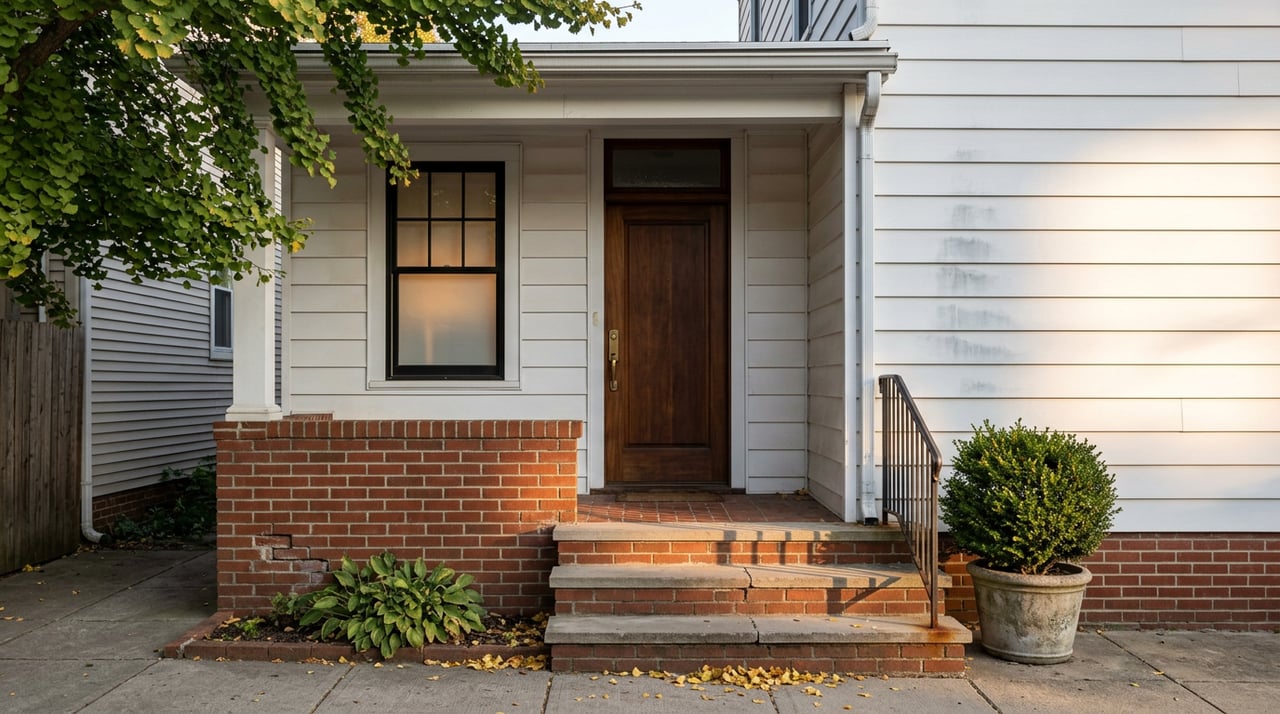
Oak Hill's stock is dominated by small multi-family. Neighborhood-level real estate data shows roughly 36% of the housing there is 2- to 4-unit apartment buildings, a share higher than 96% of U.S. neighborhoods. The rest is mostly small-to-medium single-families, many built no later than 1939. Three-deckers stand shoulder to shoulder. Duplexes fill in between.
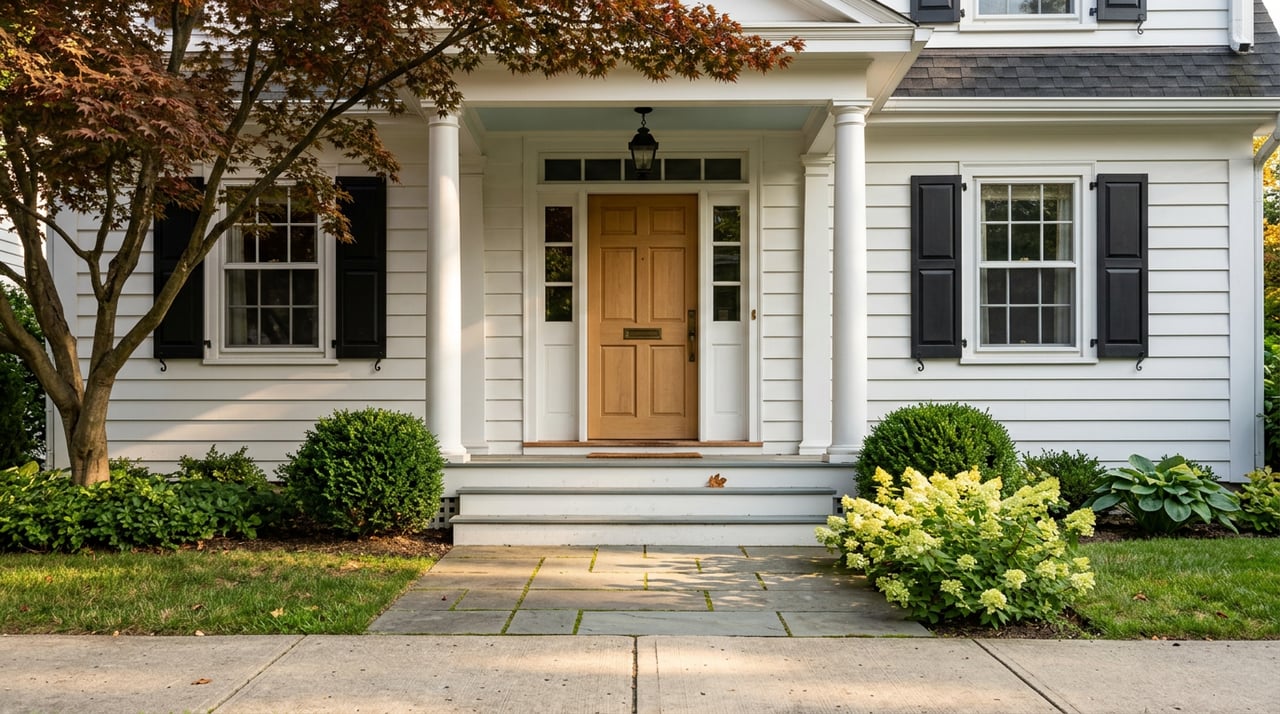
The East Side, by contrast, sells you a different product entirely. Its pricing strength is structural because the area is largely built out with very limited room for new construction, and the buyer pool skews toward academics, physicians, and relocators from Boston and New York who are less sensitive to short-term shifts. You are buying into a single-family and condo market with a College Hill historic overlay, not into a two- or three-family income stream.
That reframes the "$700K in Oak Hill vs. $780K on the East Side" comparison. In Oak Hill, that number often buys you a two-family with rental income offsetting the mortgage. On the East Side it typically buys you a smaller single-family or a condo in Wayland Square or Fox Point with no income component. Different asset. Different tax treatment. Different exit.
The East Side commands a clear 20% premium over Providence overall, and that gap has been stable for five years. Oak Hill's premium over the rest of Pawtucket is even sharper, but it is measured against a smaller, thinner tape.
Where the amenity map stops mattering
Buyers pay the East Side premium partly for walkability. Oak Hill's honest pitch is that most of that walkability does not stop at the Providence line.
Hope Street becomes East Ave the moment you cross into Pawtucket, and the retail corridor continues without a real seam. Garden Grille and Wildflour, two of the area's best-known vegetarian kitchens, sit just inside Pawtucket. Maven's Delicatessen keeps a classic Jewish deli menu alive on the Oak Hill side. Modern Diner, a Sterling Streamliner listed on the National Register of Historic Places, is a Pawtucket institution. Vicente's Supermarket handles weekday groceries. Blackstone Place covers the food, health, and everyday errands cluster near the border.
The neighborhood also inherits, without paying for, several of the East Side's best amenities. Blackstone Boulevard's walking and jogging path runs the border. Swan Point Cemetery, the arboretum-in-disguise where locals actually walk, is a short stroll south. Lippitt Park's farmers market runs Saturdays May through October and is within walking distance of most of Oak Hill. Tom Duffy Recreational Center and Max Read Field cover the neighborhood's own indoor and outdoor rec.
On the north edge, Slater Memorial Park's 197 acres hold the 10 Mile River Greenway, the 1895 Looff Carousel, Daggett House, and a dog park most East Side residents drive to anyway. Tidewater Landing, the Seekonk River stadium for Rhode Island FC, adds a walkable event anchor that the East Side does not have. The Pawtucket/Central Falls MBTA station puts Boston South Station roughly an hour away by rail, a commute option the East Side cannot match without driving to a station first.
Miriam Hospital, Brown, and RISD, the "eds and meds" employers that drive East Side demand, are the same short drive from Oak Hill.
Two transaction frictions buyers routinely miss
If you are shopping both neighborhoods seriously, two things reliably surprise people at the offer or inspection stage:
Lead paint disclosure and certification on the multi-family stock. Rhode Island's lead disclosure regime is stricter than most states, and it bites hardest on pre-1978 rentals, which describes most of Oak Hill's two- and three-families. A "Lead Certified" listing is doing the buyer a real favor. An uncertified one is not a dealbreaker but is a cost line to price into your offer. This is a friction East Side single-family buyers rarely encounter and Oak Hill multi-family buyers almost always do.
Tax rate differential across the line. Pawtucket and Providence tax residential property at different rates and reassess on different cycles. A house that looks $60,000 cheaper on the Oak Hill side can carry a materially different annual carrying cost once you factor in the tax bill. Ask for the current tax card before you write, not after. Two houses of the same list price on opposite sides of the border are not the same monthly payment.
Layer on mortgage rates hovering in the mid-6% range as of spring 2026 and inventory hovering near two months statewide, and small carrying-cost differences move a lot of buyers' actual budgets.
How to read the two markets side by side
A working checklist I give buyers who are honestly cross-shopping:
- Ignore the Oak Hill monthly median. Ask for the last 12 months of closed sales filtered to your specific housing type (single-family with X beds, or 2-family, or 3-family).
- Compare price per square foot on like-for-like stock, not headline medians. Oak Hill listings recently priced around $315 per foot. East Side listings priced closer to $437 per foot on Realtor.com's April 2026 read. That gap is the honest premium.
- If you are considering a multi-family in Oak Hill, underwrite it two ways: as an owner-occupied purchase with rental offset, and as a straight single-family equivalent. The right frame depends on whether you intend to hold a tenant long term.
- Walk the East Ave corridor on a Saturday morning during Lippitt Park's farmers market season. The overlap between the two neighborhoods' daily life is easier to feel than to read about.
- Get both towns' current tax cards and homestead rules from the assessor before you set a budget.
A short FAQ
Is Oak Hill actually cheaper than the East Side, or is that a portal illusion? Cheaper on a per-square-foot basis for comparable single-family stock, yes. But the gap narrows once you account for the multi-family share of Oak Hill's inventory and the tax differential between Pawtucket and Providence. Underwrite the specific property, not the neighborhood average.
Why does Oak Hill's median move so much month to month? Because only a handful of homes trade in any given month there. Ten sales in January 2026 is a representative volume. A single high-priced multi-family closing can move the neighborhood's median by tens of thousands of dollars. The East Side, at roughly 100+ sales in a strong month, does not have that problem.
Do East Side buyers actually consider Oak Hill? The buyers who do are usually the ones who wanted a two- or three-family with rental income, or who wanted a bigger yard for the same money, or who wanted MBTA rail access to Boston. Buyers who wanted a College Hill address, a Fox Point condo, or a specific school placement rarely cross the line.
Is now a good time to buy in either? Rate-sensitive. With mortgage rates in the mid-6% range through spring 2026, buyer activity is measured but real. The East Side's structural supply constraint continues to support prices. Oak Hill's thin volume means individual deals matter more than trend lines.
If you are weighing Oak Hill against a specific East Side pocket, I can pull the last six months of like-for-like closings and walk you through the honest price-per-foot comparison for the housing type you actually want. Sabine Green works both sides of this line every week. What's your home worth?